A large, complex build has a lot of ways to go wrong. A structural assembly with machined parts, fabricated frames, additive components, and hundreds of fasteners has to come together to a single tolerance, on a single schedule, to a single standard. The question every program manager faces when scoping contract manufacturing services is deceptively simple: hand the whole thing to one capable partner, or split it across several specialty shops?
Splitting looks cheaper on a line-item basis. Each shop quotes its piece, and each quote looks competitive. The cost that does not show up on those quotes is the cost of holding it all together: the handoffs, the freight, the tolerance mismatches, and the schedule slip when one late part stalls the whole build.
This is an approach comparison, not a case against any one shop. What follows is an honest look at how to buy contract manufacturing services for large, complex work: single-source versus multi-vendor, where each makes sense, and what to look for in a partner if you consolidate.
The short answer: one partner wins when the build is large and interdependent
Is it better to use one manufacturing partner or several? For a simple assembly, several competitive suppliers can be the right call. For a large, complex, interdependent build, a single-source partner usually wins, because the hard part is not making any one component. It is integration, tolerance control, and accountability across all of them.
The more the parts have to fit together, the more a fragmented supply chain costs you. Here is where that cost hides.
The real cost of a fragmented supply chain
A multi-vendor build carries costs that rarely appear in a quote. They show up later, in the schedule and budget.
- Handoffs. Every transfer between shops is a chance to lose information, context, and time. Drawings get interpreted differently. Revisions do not always reach everyone. Each handoff adds lead time.
- Freight and handling. Large parts are expensive and risky to move. Shipping a heavy weldment or a machined structure between three states adds cost, lead time, and the chance of transit damage on parts that are hard to replace.
- Administrative load. Five vendors means five contracts, five sets of POs and invoices, five supplier qualifications, five NDAs to police, and five quality systems to audit. Every design revision has to be issued, tracked, and confirmed five times. None of that appears on a quote, and all of it lands on your team.
- Tolerance stack-up. When separate shops make mating parts to their own reading of the tolerances, small deviations add up. Parts that each pass their own inspection can still refuse to fit at assembly. Chasing that stack-up after the fact is slow and costly.
- Schedule risk. A multi-shop build moves at the speed of its slowest supplier. One late part holds up assembly, and you have little leverage to recover, because no single party owns the timeline.
- Finger-pointing. When something does not fit, each vendor points to the others. You become the integrator and the investigator, spending program time settling disputes instead of building.
Piece price versus total cost when buying contract manufacturing services
Every cost above is real, and almost none of it is visible when you lay five quotes side by side. That is the trap in comparing manufacturing partners on price per part. The quotes are comparable. The programs are not.
What a multi-vendor quote package leaves out:
- The engineering hours your team spends resolving interface questions between shops
- The buyer and quality hours spent qualifying, contracting, and auditing each supplier
- Freight between operations, plus the risk premium on moving large parts
- Rework and fit-up labor when parts made to different interpretations meet at assembly
- The cost of a late delivery, which is usually the largest number on the list and never appears on any quote
Price those in and the comparison changes. A consolidated quote often carries a higher headline number and a lower program cost.
But doesn’t a single-source supplier mean losing pricing leverage?
It is a fair objection, and the answer is not to pretend otherwise. Yes, consolidating means you are not putting each component out to competitive bid. What you get in exchange is one party that can re-sequence work, absorb a design change without five repricing cycles, and internalize the integration cost you would otherwise pay for in engineering hours and schedule.
The way to keep it honest is structural, not adversarial:
- Benchmark the consolidated quote against a fully loaded multi-vendor estimate, not the sum of the piece prices.
- Ask for open-book pricing on the major operations.
- Keep a competitive quote on your highest-value component as a reference point.
- Measure the partner on delivered cost per program, not per part, because that is the number your program actually pays.
What single-source manufacturing and a one-stop-shop actually require
Single-source manufacturing means one partner takes responsibility for the whole build, not just a slice of it. The terms turnkey manufacturing and one-stop-shop describe the same idea: you hand over a requirement and get back a finished, verified product.
For a large, complex build, that requires real capability under one roof, not a broker subcontracting the hard parts:
- Machining for precision components
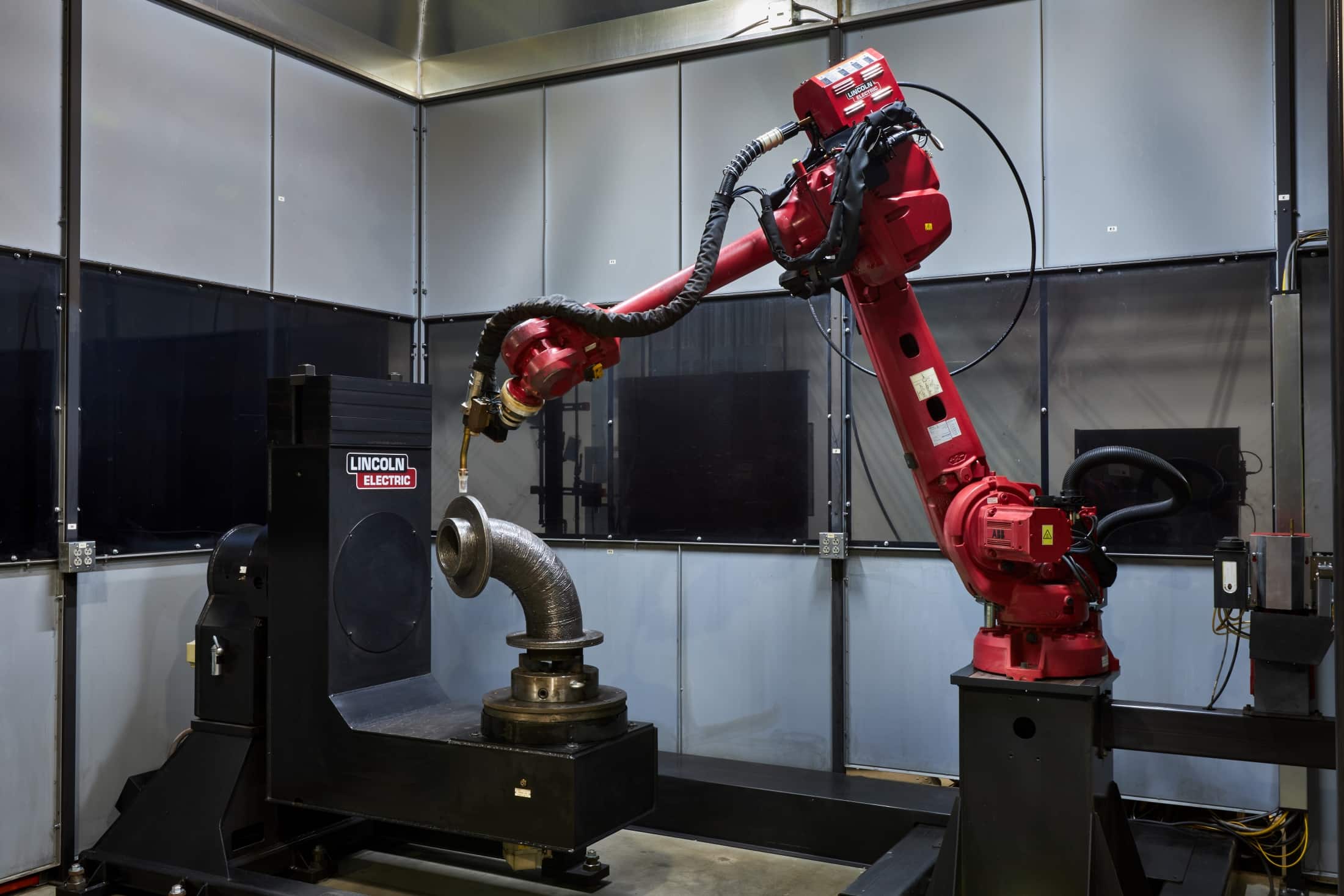
- Fabrication and welding for large structures and frames
- Metal additive for near-net or hard-to-source parts
- Assembly and integration of the finished build
- Inspection and metrology to verify the whole assembly, not just individual parts
- Installation or field support where the program needs it
This is what vertically integrated manufacturing means in practice. The processes that have to agree on tolerance and fit live in the same building, under the same quality system. That is the difference between true turnkey manufacturing and a general contractor who still has to ship your parts around the country.
Accountability and traceability with one quality system
The strongest argument for consolidation is accountability. With one partner, there is one owner of the outcome and one quality system of record.
On a multi-vendor build, quality traceability fractures across several systems, several certification scopes, and several inspection records that were never designed to talk to each other. When a nonconformance surfaces at assembly, reconstructing what happened across shops is slow.
A single AS9100-certified partner keeps traceability intact from raw material through machining, fabrication, additive, assembly, and final inspection. One QA system covers the whole build. If something has to be corrected, one organization owns the root cause and the corrective action. For aerospace and defense programs, that unbroken chain of custody is not a nice-to-have. It is often a requirement.
Fewer parties holding your design data
Consolidation has a security dimension that rarely makes the trade study. A multi-vendor build means the design gets distributed. Each shop needs enough of the model, the drawings, and the interface data to make its piece. That means the package leaves your control multiple times, to multiple networks, under multiple agreements you have to write, track, and enforce.
For a proprietary process or a competitive product, that is real exposure. For aerospace and defense, it is also a compliance question. Controlled technical data under ITAR or EAR has to be handled correctly by every party that touches it, and each additional supplier means another set of access controls, another authorized-person list, and another audit surface.
A single-source supplier narrows that to one. One organization holds the full design package, under one agreement, with one set of controls to verify. You are protecting the build in one place instead of defending five perimeters.
Weighing a consolidated build against a multi-shop plan? |
When consolidation saves time and money, and when it does not
Single-source is not always the answer, and being honest about that is part of the case for it.
Consolidation saves the most when:
- The build is large, complex, and interdependent, with many parts that must fit to a shared tolerance.
- The schedule is tight and you cannot absorb the lead time of multiple handoffs.
- Traceability and a single quality standard matter, as in aerospace, defense, and energy.
- You do not have the internal capacity to act as integrator across several suppliers.
A multi-vendor approach can still make sense when:
- The part is simple, standardized, and bought in high volume where price per piece dominates.
- You have a mature internal supply chain team that already manages integration well.
- No single partner has all the capabilities the build needs, which is exactly why capability breadth is the first thing to check.
The deciding factor is interdependence. The more the pieces depend on each other, the more a single owner is worth.
Capacity and a single point of contact for program managers
For the program manager, a single-source supplier changes the day-to-day. Instead of managing five relationships, five schedules, and five quality records, you manage one. One point of contact owns the status, the risks, and the recovery plan.
Capacity matters here too. A large-scale partner can absorb schedule changes, surge on a critical path, and re-sequence work internally without renegotiating across vendors. When a design change lands mid-build, one organization adjusts, rather than five shops each repricing and rescheduling their piece.
That is the quiet advantage of large-scale manufacturing under one roof: the ability to move the whole build, not just one part of it.
What to look for in a large-scale manufacturing partner
If you consolidate your contract manufacturing services, the partner has to earn it. Look for:
- Capability breadth. Machining, fabrication, additive, assembly, and inspection genuinely in-house, not quietly subcontracted.
- Capacity and size. The floor space, equipment, and people to handle large parts and absorb schedule pressure.
- Quality certification. ISO 9001, AS9100, or the standard your program requires, with traceability across the whole build.
- A single point of accountability. One team that owns the outcome end to end.
- Engineering and DFM input. A partner that helps make the build manufacturable, not one that only takes prints and quotes.
- Track record. Proven delivery on large, complex programs like yours.
Frequently asked questions
Is it better to use one manufacturing partner or several?
For simple, high-volume parts, buying contract manufacturing services from several competitive suppliers can be cheaper. For a large, complex, interdependent build, one partner is usually better, because integration, tolerance control, and accountability across parts matter more than the price of any single component.
What are the risks of splitting a complex build across multiple shops?
The main risks are handoff delays, tolerance stack-up between parts made to different interpretations, freight cost and damage on large parts, schedule risk tied to the slowest supplier, and fractured accountability when something does not fit at assembly.
What is a single-source or one-stop-shop manufacturer?
It is one partner that delivers the entire build, machining, fabrication, additive, assembly, and inspection, under one roof and one quality system. Also called turnkey manufacturing, the model hands you a finished, verified product rather than a set of parts to integrate yourself.
How does supplier consolidation reduce program risk?
One partner means one schedule owner, one quality system with unbroken traceability, fewer handoffs, less tolerance stack-up, less administrative overhead, one holder of your design data, and a single point of accountability. That removes the coordination gaps where cost, delay, and defects usually hide on multi-vendor builds.
What should I look for in a large-scale manufacturing partner?
Look for genuine in-house capability breadth, enough capacity to handle large parts and schedule surges, AS9100 or the required certification with full traceability, a single point of accountability, design-for-manufacturing input, and a track record on large, complex programs.
Does single-sourcing cost more than using multiple suppliers?
On piece price, often yes. On program cost, usually no. A single-source quote absorbs integration, freight between operations, and coordination work that a multi-vendor package leaves on your team. Compare a consolidated quote against a fully loaded multi-vendor estimate that includes engineering, quality, and freight hours, rather than against the sum of the piece prices.
Is my intellectual property safer with a single-source manufacturer?
Generally yes. A multi-vendor build distributes your design package across several companies, networks, and agreements. One partner means one holder of the full design, one agreement to enforce, and one set of access controls to verify. For programs handling controlled technical data under ITAR or EAR, it also means one compliance surface instead of several.
One supplier or five is a decision worth getting right early. Baker Industries brings machining, fabrication, additive, assembly, and inspection together under one roof and one AS9100 quality system. Send us your build and we will show you where single-source saves time and cost on your program. Request a program review to start. |