If you’re sourcing parts for defense or aerospace programs, you’ve likely encountered the term “ITAR” in supplier conversations. Understanding what makes a manufacturing partner ITAR-compliant—and why it matters for your tooling, flight hardware, and precision manufacturing needs—can help you make confident decisions about your supply chain.
Baker Industries delivers ITAR-registered manufacturing for defense tooling and flight hardware, with AS9100D and ISO 9001 certifications backing every project. This article explains what ITAR registration means, what requirements compliant suppliers must meet, and how to evaluate potential partners for your defense manufacturing programs.
Key Takeaways: What Is an ITAR Supplier for Defense Tooling & Hardware?
- ITAR stands for International Traffic in Arms Regulations, administered by the U.S. State Department’s Directorate of Defense Trade Controls (DDTC).
- ITAR-registered manufacturers must control access to defense articles, technical data, and production environments to protect national security.
- Material traceability, secure data handling, and documented processes are requirements for ITAR-compliant manufacturing.
- Baker Industries, a Lincoln Electric company, brings over 30 years of ITAR-registered defense tooling and flight hardware manufacturing experience.
What Is ITAR and Why Does It Matter for Defense Manufacturing?
The International Traffic in Arms Regulations (ITAR) are a set of U.S. government regulations that control the manufacture, export, and handling of defense-related articles. The State Department’s DDTC administers these regulations to protect sensitive technologies from unauthorized foreign access.
For defense OEMs and procurement teams, ITAR compliance isn’t optional—it’s a legal requirement. Any supplier manufacturing parts, tooling, or components listed on the United States Munitions List (USML) must be ITAR-registered. This includes things like flight hardware, weapon systems and their components, military vehicle parts, and related manufacturing equipment.
What Defines an ITAR-Compliant Manufacturing Supplier?
An ITAR-compliant supplier goes beyond simple registration. True compliance means the manufacturer has integrated security protocols, access controls, and documentation systems into every aspect of operations. Here’s what that looks like in practice.
DDTC Registration and Annual Renewal
The foundation of ITAR compliance is registration with the Directorate of Defense Trade Controls. This registration must be renewed annually and requires the manufacturer to demonstrate ongoing adherence to export control requirements.
Registration alone, however, doesn’t guarantee a supplier can handle your project securely. You’ll want to verify that the manufacturer maintains active compliance programs and has staff trained on ITAR requirements.
Controlled Production Environments
ITAR-registered facilities must restrict access to production areas where defense articles are manufactured. This means physical security measures like badge access, surveillance systems, and visitor management protocols that prevent unauthorized personnel from accessing sensitive work areas.
Temperature and vibration control also matter for defense manufacturing. At Baker Industries’ CNC machining facilities, environmental controls help maintain the tight tolerances required for flight hardware and defense tooling.
Technical Data Protection Protocols
Controlled technical data—including CAD files, engineering drawings, images, and process specifications—falls under ITAR protection. Compliant manufacturers must encrypt digital files, restrict access to authorized U.S. persons only, and maintain access logs.
This is especially important during file transfers. When you send technical drawings to your machining supplier, those files must be handled through secure channels with documented chain of custody.
What Other Certifications Should ITAR Suppliers Hold?
ITAR registration establishes legal authorization to manufacture defense articles. Quality certifications demonstrate the supplier can actually produce parts to aerospace and defense standards.
AS9100D Certification
AS9100D is the aerospace industry’s quality management standard, building on ISO 9001 with additional requirements for product safety, risk management, and traceability. Most defense prime contractors require AS9100D certification from their supply chain partners.
This certification covers everything from design controls to final inspection, ensuring repeatable processes that meet your program requirements.
Nadcap Accreditation
National Aerospace and Defense Contractors Accreditation Program (Nadcap) accreditation validates specific manufacturing processes like welding, heat treating, or non-destructive testing. For tooling and flight hardware, Nadcap accreditation signals that a supplier’s specialized processes meet industry-accepted standards.
CMMC Compliance
The Cybersecurity Maturity Model Certification (CMMC) focuses on protecting Controlled Unclassified Information (CUI) in the defense supply chain. Defense contractors handling CUI must meet CMMC Level 2 requirements—110 security controls that govern how digital information is stored, transmitted, and protected.
How ITAR Shapes Precision Machining for Defense Applications
For defense tooling and flight hardware, ITAR compliance affects every stage of manufacturing, from receiving your technical data package through final inspection and delivery.
Material Sourcing and Traceability
Every material entering an ITAR facility must be fully documented. This includes certificates of conformance, mill test reports, and traceability records showing the material’s origin and composition. Complete documentation prevents unauthorized materials from compromising defense components.
For exotic alloys like Inconel®, Invar®, or titanium commonly used in flight hardware and tooling, this traceability becomes especially critical. Baker Industries maintains documentation on every material lot, ensuring full traceability from raw stock to finished part.
Documentation and Record-Keeping
ITAR requires manufacturers to maintain detailed records of production activities and compliance verifications. This documentation must be retained for specific periods and made available for government audit if requested.
For defense programs, this level of record-keeping often supports First Article Inspection (FAI) requirements and helps resolve any questions about part conformance down the line.
How to Evaluate ITAR Manufacturing Suppliers for Defense Tooling
When selecting a manufacturing partner for defense tooling, flight hardware, or precision-manufactured components, your evaluation should cover both compliance credentials and manufacturing capabilities.
Verify Registration Status
Request the supplier’s DDTC registration number and confirm their registration is current. Ask about their internal compliance programs, employee training, and how they handle ITAR-controlled information.
Assess Manufacturing Capabilities
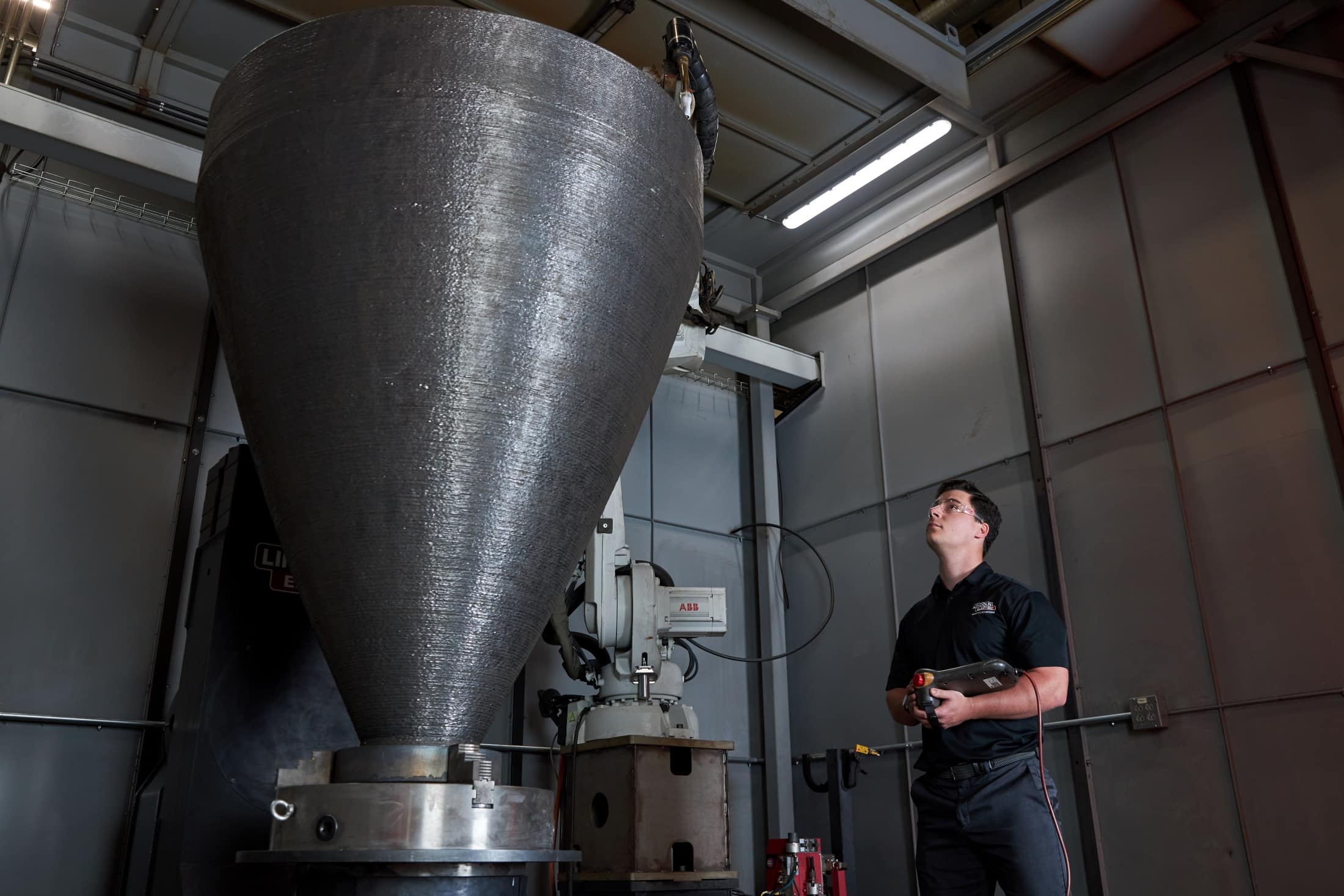
Can the supplier handle your part sizes, tolerances, and materials? For large-scale defense tooling and hardware, you need a manufacturer with equipment capacity to match. Baker Industries operates some of the largest CNC machines in North America, machining parts from a few inches to over 100 feet long.
Review their inspection and quality capabilities as well. CMMs, laser trackers, and documented inspection processes ensure your parts meet dimensional requirements.
Review Quality Certifications
Confirm AS9100D certification, and check for Nadcap accreditation if your project involves specialized processes. Ask for copies of current certificates and note their expiration dates.
Evaluate Experience and Track Record
How long has the supplier worked with defense OEMs? What programs have they supported? A manufacturer with decades of aerospace and defense experience understands the documentation requirements, communication protocols, and quality expectations your programs demand.
Why U.S.-Based Manufacturing Matters for ITAR Programs
ITAR restricts defense articles and technical data from being shared with foreign nationals, including foreign nationals working in the U.S. This makes domestic manufacturing partnerships essential for ITAR-controlled programs.
A U.S.-based supplier with an all-domestic workforce simplifies compliance. There’s no need to manage complex export licenses or verify personnel citizenship status. Your technical data stays controlled throughout the manufacturing process.
Baker Industries operates five facilities spanning over 250,000 square feet in Macomb, Michigan—with a dedicated workforce of hundreds of experienced engineers, machinists, and tradespeople—all focused on delivering precision manufacturing for the aerospace and defense industry.
FAQs About ITAR Manufacturing Suppliers for Defense
What does ITAR registration allow a manufacturer to do?
ITAR registration authorizes a manufacturer to produce defense articles listed on the United States Munitions List. This includes parts, tooling, and components for military aircraft, spacecraft, missiles, weapons systems, and more. Without registration, a supplier cannot legally manufacture these items.
How is ITAR different from EAR compliance?
ITAR covers defense articles and services controlled by the State Department, while the Export Administration Regulations (EAR) cover commercial and dual-use items controlled by the Commerce Department. Defense tooling and flight hardware typically fall under ITAR.
Can foreign-owned companies be ITAR registered?
Yes, but with restrictions. Foreign-owned companies can register with DDTC, but they must implement additional controls to prevent unauthorized access to defense articles and technical data. Many defense prime contractors prefer U.S.-owned, U.S.-operated suppliers to minimize compliance complexity.
What happens if a supplier violates ITAR requirements?
ITAR violations can result in civil fines up to $1 million per violation and criminal penalties including imprisonment. Violations also damage supplier relationships and can result in debarment from future defense contracts.
How does Baker Industries protect ITAR-controlled technical data?
Baker Industries maintains secure facilities with access controls, encrypted file handling, and documentation systems. All personnel handling defense articles undergo training on ITAR requirements. The company’s ISO 9001 and AS9100D certifications reflect this commitment to controlled manufacturing environments.
What tolerances can ITAR manufacturers hold for flight hardware?
Qualified ITAR manufacturers can often hold extremely tight tolerances required for flight-critical components. Baker Industries consistently achieves general tolerances as tight as ±0.001 inches, meeting the stringent requirements of aerospace and defense programs.
How do I verify a supplier’s ITAR registration status?
Request the supplier’s DDTC registration number directly. You can also ask for documentation showing their registration renewal date and inquire about their internal compliance programs. Reputable suppliers will readily share this information during the qualification process.