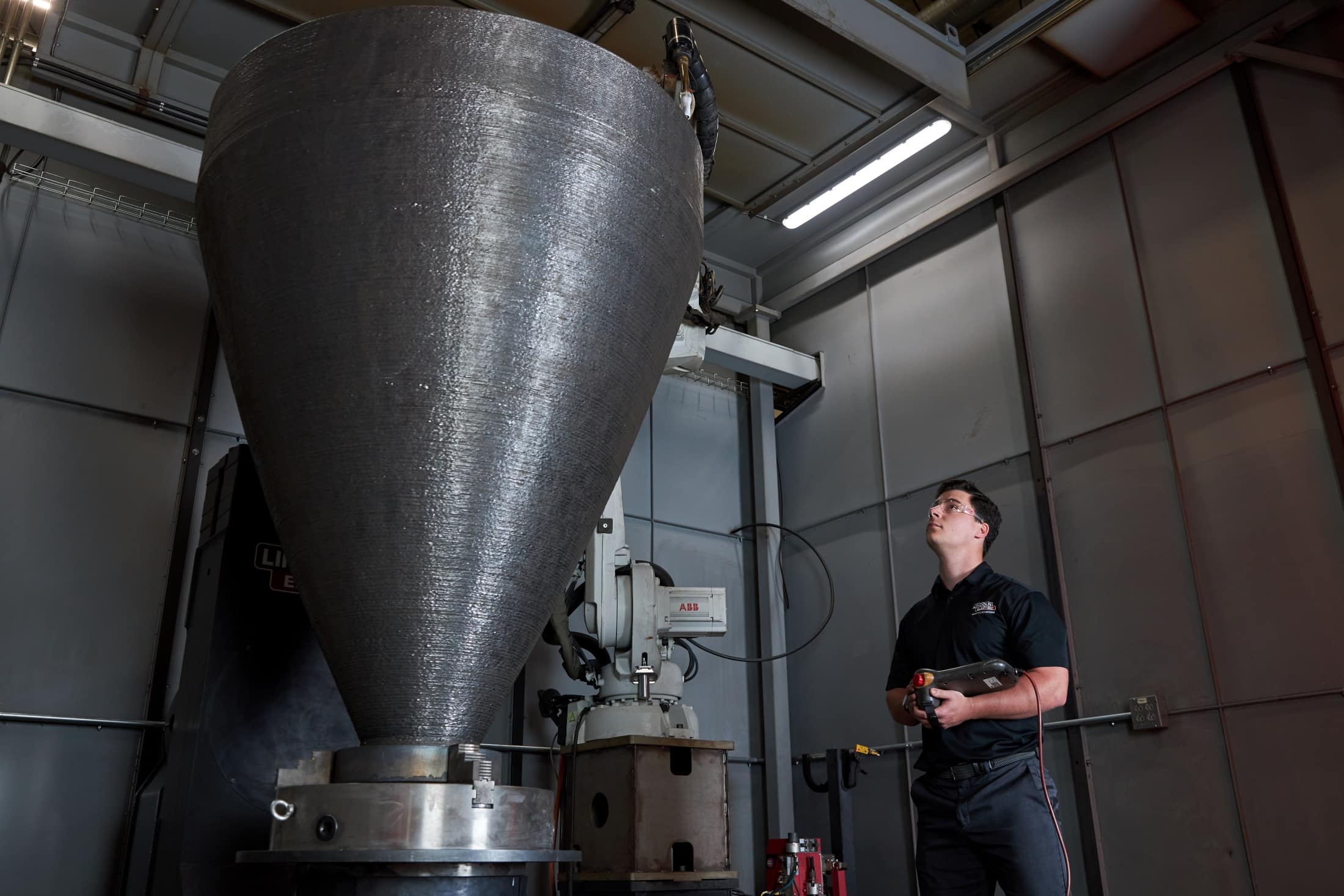
Complex projects demand manufacturing processes that can keep up. Whether you’re producing aerospace components with tight tolerances, medical devices that require biocompatible materials, or industrial parts with intricate geometries, advanced CNC machining for complex projects has become the standard approach for a reason.
Here are five advantages that make CNC machining the go-to solution for highly involved manufacturing projects.
1. High Precision and Accuracy
When you’re building turbine parts that face extreme heat or medical implants that need to fit exactly right, micrometer-level precision is the baseline. Precision is what sets CNC machining apart from other methods.
CNC machining reduces the risk of human error. Every cut follows a programmed path, so part 1 and part 1,000 come out identical. The accuracy holds up across entire production runs, which is critical when tolerances are tight and materials are difficult to work with.
A few microns can mean the difference between a part that works and one that doesn’t. Computer-controlled movements deliver the consistency that critical applications require. This level of precision also enables manufacturers to work with harder materials and tighter specifications that would be impractical with manual methods.
When quality control depends on holding tolerances within 0.001 inches or less, CNC machining provides the reliability required.
2. Advanced Manufacturing Solutions for Intricate Designs
CNC machines work with aluminum, titanium, hardened steel, composites, and more—whatever your design calls for. But the material range is only part of the advantage.
The real benefit is geometric freedom. Features that complicate manual machining operations become straightforward with CNC. CAD/CAM integration lets you model something complex, simulate the tool paths, and produce it without compromising the design.
The same digital file works for prototyping one part or running hundreds. The process scales without retooling or translation errors. This versatility extends to material thickness variations, angled features, and parts that combine multiple functions in a single component.
Engineers can design for performance first, knowing the manufacturing process can execute what’s been modeled. That freedom translates to lighter parts, better functionality, and designs that don’t sacrifice performance for manufacturability. Advanced manufacturing solutions like these give design and engineering teams the flexibility to iterate quickly and refine designs based on real-world testing.
3. Capability for Complex Geometries with Multiple Axes
5-axis machining eliminates the need to reposition parts multiple times. Instead of introducing potential error with every setup, you control five axes simultaneously while the tool stays oriented correctly throughout the cut.
For parts with compound curves or features on multiple faces, this is often the only practical approach. Turbine blades, impellers, contoured molds, surgical implants—these geometries need continuous tool contact and precise control. For aerospace component manufacturing and medical device machining, this multi-axis capability is essential.
Fewer setups also mean faster cycle times. What used to take four operations on a 3-axis machine happens in one, with less handling, simpler fixturing, and better accuracy. The ability to machine multiple surfaces without repositioning also reduces the cumulative tolerance stack-up that occurs when parts move between operations.
Each setup transition is an opportunity for misalignment. 5-axis machining minimizes those transitions and improves overall part accuracy.
4. Superior Surface Finish
Surface quality directly impacts performance. Roughness affects fatigue life, sealing, corrosion resistance, and wear characteristics over time.
Multi-axis machining maintains optimal cutting angles, which reduces tool marks and produces smoother surfaces. In many cases, you can skip secondary finishing entirely or reduce it to light polishing.
Better surface finish translates to better durability and more predictable behavior under load or other stress, characteristics that matter for high-performance components. For aerospace applications, surface finish can affect aerodynamic performance. In hydraulic systems, smoother surfaces reduce friction and improve sealing.
Medical implants benefit from controlled surface textures that promote osseointegration or reduce bacterial adhesion. The surface finish isn’t just aesthetic. It’s a functional requirement that CNC machining addresses during the primary manufacturing process. Industrial machining services that prioritize surface quality can reduce downstream processing costs significantly.
5. Reduced Production Time and Increased Efficiency
Among the key advantages of using CNC machinery is how it automates most manual steps. Tool changes happen automatically, feed rates adjust in real time, and programs run consistently, making lights-out operation feasible for qualified processes.
With 5-axis systems, setup time drops considerably. One setup instead of four means less handling and simpler fixturing. Material waste decreases because tool paths are optimized and repeatable.
Shorter lead times, predictable costs, and reliable production schedules follow naturally. When deadlines compress, that responsiveness becomes valuable. The efficiency gains compound across production volumes. What saves ten minutes per part adds up quickly over a hundred or a thousand parts.
Digital programs can be stored, recalled, and modified for design revisions without rebuilding physical fixtures or templates. This makes revision cycles faster and reduces the cost of engineering changes during development. Custom CNC programs can be written once and recalled for repeat orders, making production planning more predictable.
Bringing Complex Designs to Life
Advanced CNC machining delivers measurable advantages: micrometer-level accuracy, flexibility across materials and geometries, multi-axis capability for complex geometries, superior surface quality, and efficiency from prototype through production.
These capabilities enable modern engineering: tighter tolerances, faster cycles, greater confidence in critical applications. When designs push boundaries, the manufacturing process needs to keep pace. CNC machining provides the precision and flexibility to turn complex concepts into finished parts.
Frequently Asked Questions About CNC Machining
What materials does Baker Industries work with for complex CNC machining?
Our advanced CNC machining centers can process a wide range of materials, but our specialization is in difficult-to-machine alloys required by high-stakes industries. We have extensive experience with titanium, hardened steels, and other aerospace-grade materials for clients in the Defense, Aerospace, and Automotive sectors where performance is critical.
Is CNC machining a standalone service at Baker Industries?
CNC machining is a core capability within our complete, end-to-end manufacturing solution. We operate as a true one-stop-shop, managing projects from initial design and engineering through fabrication, assembly, quality inspection, and on-site installation. This seamless workflow guarantees that the precision achieved in machining is carried through every stage of the project.
What specific applications is 5-axis machining used for at Baker Industries?
Our 5-axis machining capability is fundamental to producing the complex, large-scale components our clients require. We rely on this technology to manufacture parts with intricate geometries and superior surface finishes—including high-performance aerospace components, specialized defense hardware, and large-format automotive tooling. For these applications, absolute precision and reliability are non-negotiable.
Engine Parts
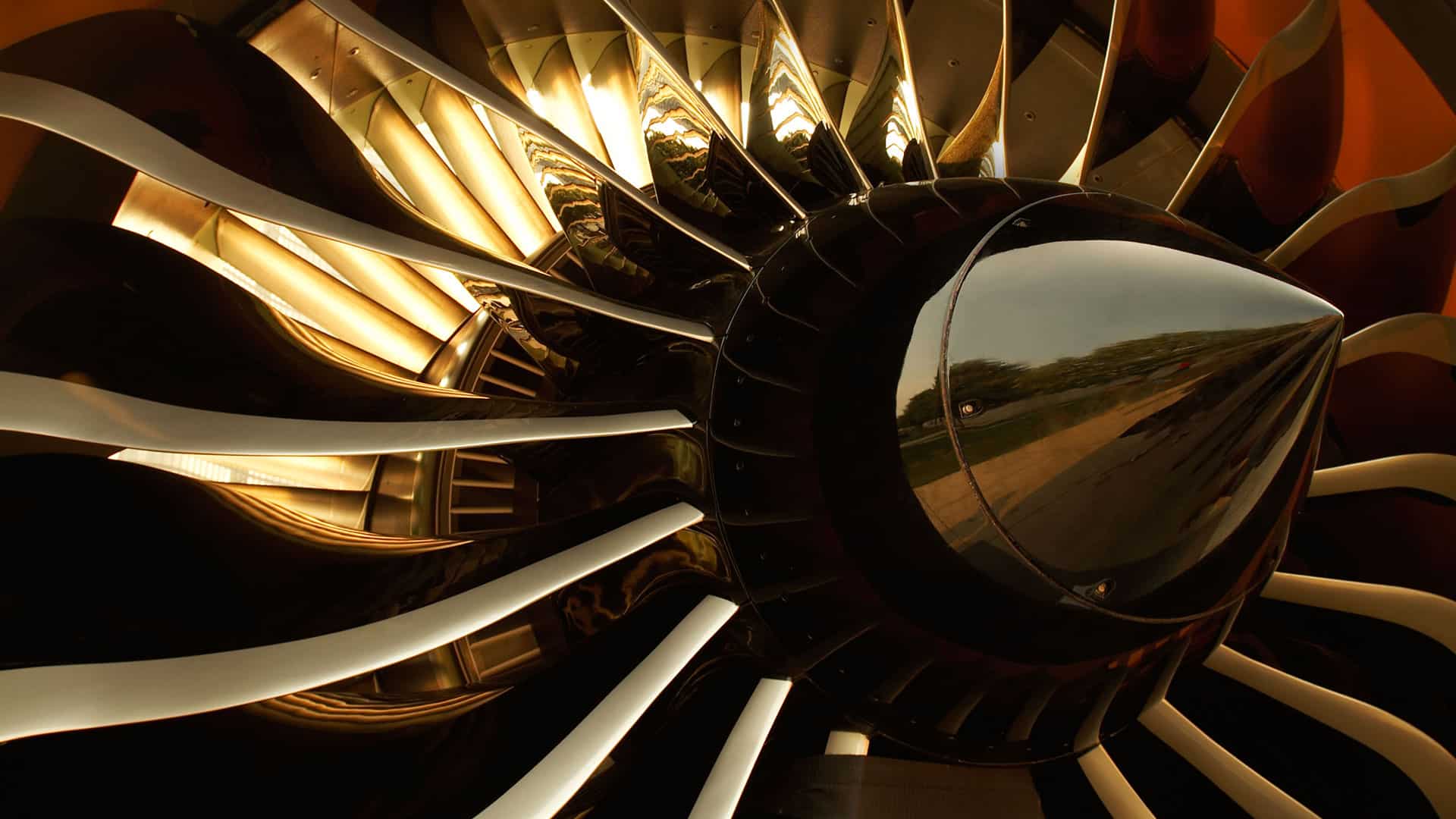
Jet engines are a prime application for additive manufacturing, with components like the GE Aerospace LEAP fuel nozzle leading the way. By consolidating 20 separate pieces into a single 3D-printed part, weight was reduced by 25% and durability was improved fivefold.
Internal Air Ducts
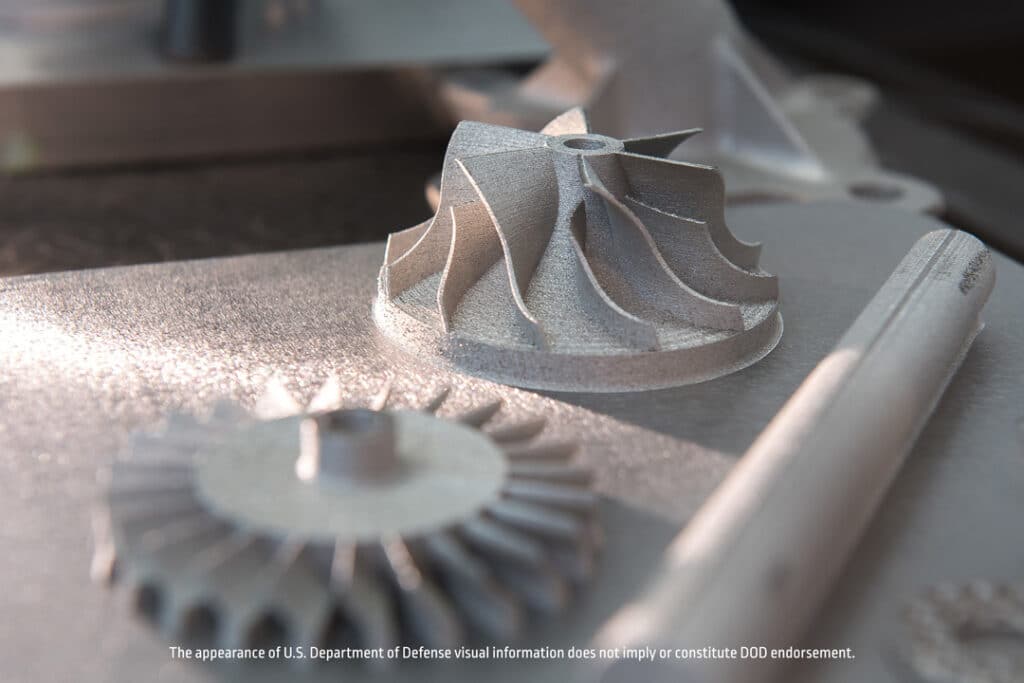
Cabin climate control and engine airflow ducts often have complex, curving shapes that must snake through tight spaces. Traditionally, such ducts are made in multiple pieces and joined together. Now, engineers are 3D printing entire air duct assemblies in one go.
Spacecraft Components
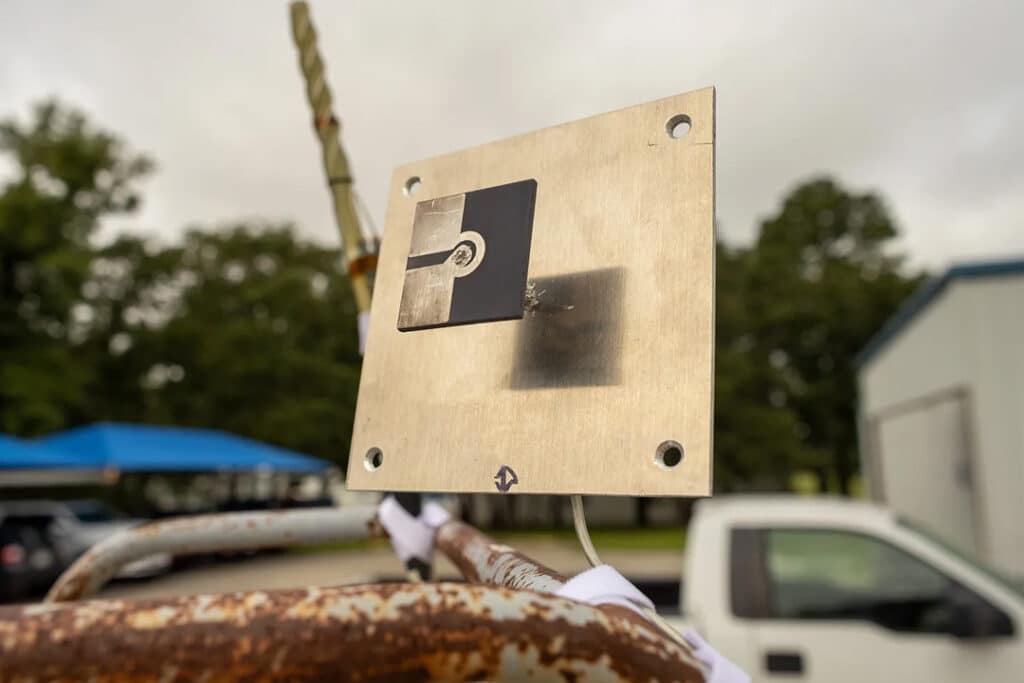
Both satellite manufacturers and rocket builders are heavily using additive manufacturing. Complex satellite antenna mounts and sensor brackets are being printed to reduce weight while maintaining rigidity in extreme temperature swings.
Structural Components
Airbus achieved a milestone in aerospace additive manufacturing by installing a 3D-printed titanium bracket on the A350 XWB’s pylon, marking the first time a 3D-printed metal part was used in a serial-production aircraft.
Tooling and Fixtures
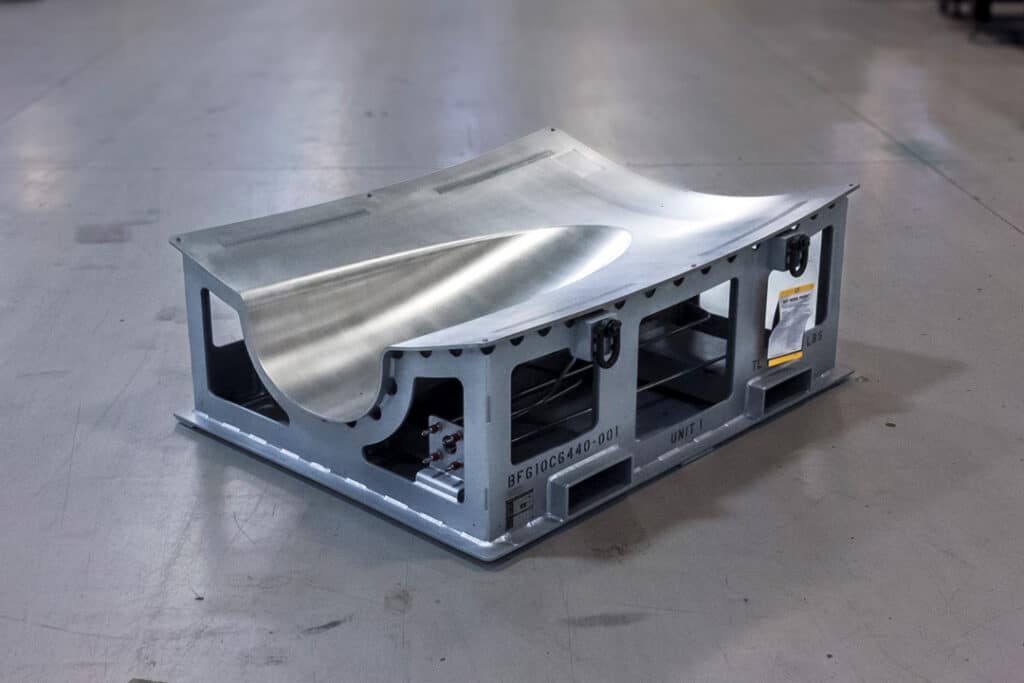
Not every 3D printed item that benefits aerospace is a flight part. A lot of value comes from printing the tooling, jigs, and fixtures used in manufacturing and maintenance. Aerospace companies routinely 3D print custom assembly jigs, drilling templates, gauges, and even workshop tools.
Additive Manufacturing’s Place in Modern Aerospace
As materials and printing technologies continue to advance, the list of components benefiting from 3D printing will only grow, bringing lighter aircraft, more efficient spacecraft, and faster production timelines within reach.
The Value of 3D Printed Aerospace Parts
In summary, 3D printing is fundamentally improving how we design and produce aerospace parts. Additive manufacturing allows aerospace manufacturers to overcome the constraints of machining and casting, offering benefits like reduced weight, increased design flexibility, and improved material efficiency.
Lighter components mean better fuel economy and payload capacity; greater design freedom means engineers can achieve higher performance and efficient use of materials, and on-demand production means lower costs and less waste.
The adoption of 3D printing in aerospace is about rethinking what’s possible. By producing lighter, stronger, and more integrated components, we’re enabling aircraft and spacecraft to go farther, carry more, and operate with greater precision. As additive manufacturing continues to evolve, the pace of innovation will accelerate, giving engineers the tools to solve problems that once seemed unsolvable. In an industry where every gram matters and every mission counts, that capability is nothing short of transformative. Contact Baker today to learn how our 3D printing expertise can help you leverage this transformative technology and elevate your next aerospace project.
Common Questions About 3D Printing in the Aerospace Industry
How does 3D printing help the aerospace industry?
3D printing helps the aerospace industry by overcoming the limitations of traditional manufacturing. It enables the creation of parts with highly complex geometries, such as internal channels and lattice structures, that are difficult or impossible to produce with methods like machining or casting. This allows for significant lightweighting of components, which improves fuel efficiency and increases payload capacity. Furthermore, it allows engineers to consolidate multiple parts into a single, stronger component, reducing assembly time, weight, and potential points of failure.
What is the future of 3D printing in the aerospace industry?
The future of 3D printing for aerospace applications points toward accelerated innovation and wider adoption. As materials and printing technologies continue to advance, the range of flight-critical components that can be printed will expand. We can expect to see lighter and more efficient aircraft and spacecraft, with production timelines that are faster and more streamlined. The technology will continue to give engineers the tools to solve complex design challenges, making what was once unsolvable a reality.
What are the benefits of 3D printing in the aerospace industry?
For space applications, 3D printing offers critical advantages. The ability to create lightweight yet strong components is essential for reducing launch costs and maximizing payload capacity on rockets and satellites. Part consolidation is also a major benefit, as creating single-piece components for spacecraft reduces the risk of failure during a mission. Additionally, 3D printing allows for the creation of highly specialized and complex parts, like satellite antenna mounts and sensor brackets, that are optimized for the extreme conditions of space.